
World Mental Health Day is observed on October 10 each year, offering a time to raise awareness around efforts that support mental health.
World Mental Health Day stems back to 1992, when the World Federation for Mental Health started a global advocacy and awareness program that focused on mental health. In 1994, at the suggestion of Secretary General Eugene Brody, World Mental Health Day was celebrated for the first time with the theme: “Improving the Quality of Mental Health Services throughout the World.”
Mental Health Day continues to be recognized around the world to this day. In this article, we’ll explore how you can observe this important holiday through beneficial mental health and self-care practices. Keep in mind that these suggestions aren’t exclusive to October 10—they can be used to benefit your mental health throughout the year.
Try the Five Finger Breathing Method
Everyone experiences stress at some point in their life. For most of us, that stress reached its peak during the past two and a half years. The pandemic is still relatively recent, and many of us are learning how to manage new jobs, workloads, travel plans, vaccines, and the overall “new normal” of living in a post-pandemic era. Neuroscientist Dr. Judson Brewer, director of research and innovation at Brown University’s Mindfulness Center, has developed an easy meditation practice that he writes about in his book, Unwinding Anxiety: New Science Shows How to Break the Cycles of Worry and Fear to Heal Your Mind. The exercise, which was featured in The New York Times, involves the following:
- Hold one hand out in front of you with your fingers spread out
- Slowly trace the outside of your hand with the index finger of your other hand
- Breathe in when you trace up a finger
- Breathe out when you trace down the finger
- Trace your entire hand, then reverse the direction and do it again
Dr. Brewer explains in his book that this meditation practice helps concentrate on breathing while engaging in two core senses: sight and touch. Because this multisensory meditation task helps you concentrate on breathing, little room is left in the mind for negative thoughts. Dr. Brewer also explains that our brains are hardwired similarly to computers, meaning we have limited working memory.
When anxious thoughts or negative emotions enter, our brains have reduced space for tasks that involve thinking and problem-solving, leading to that feeling of brain fog. This exercise helps focus on something other than what causing stress and can be done quickly wherever you are—it doesn’t involve sitting on a yoga mat or needing to be in a dark room. You can practice this meditation method at home, sitting in the office, out at an event, or elsewhere.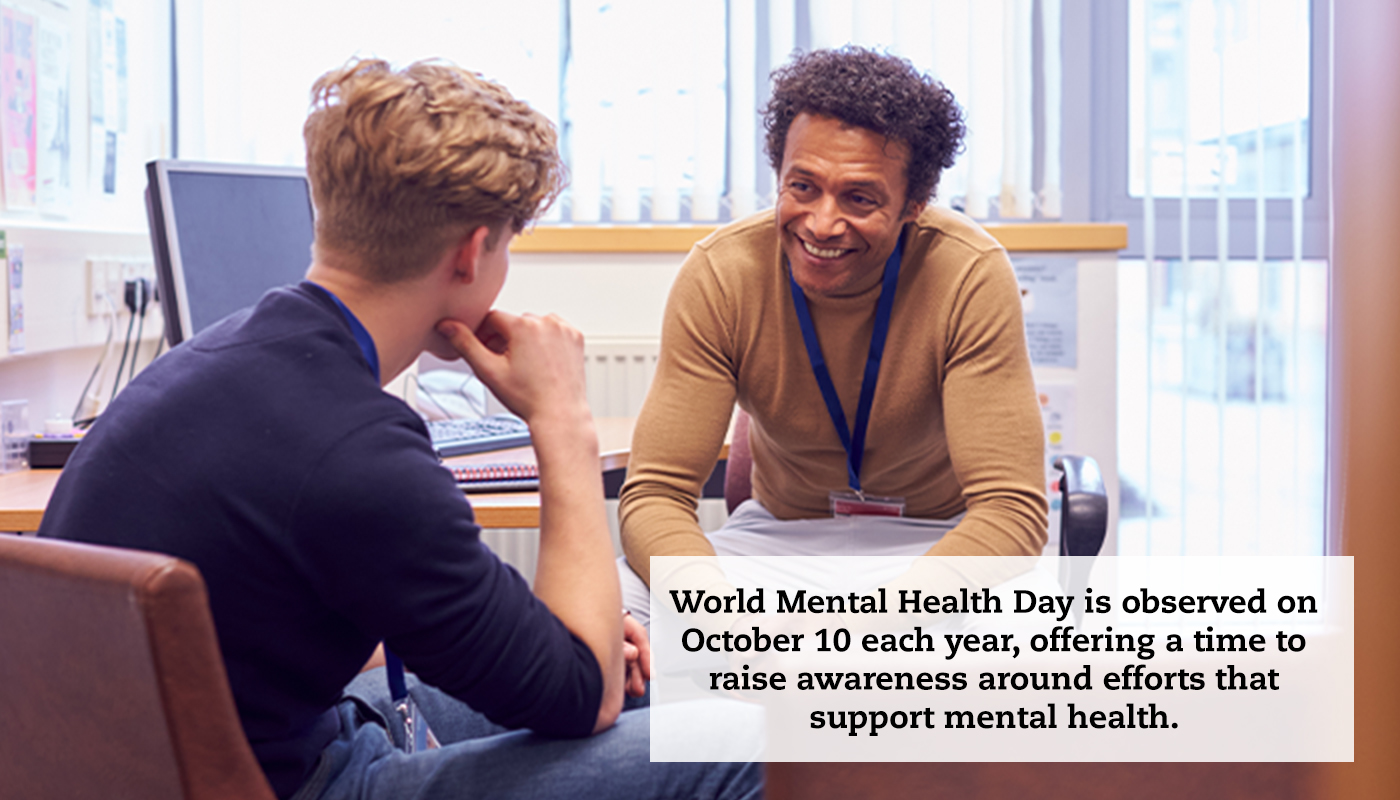
Try Sober October
We get it: there’s nothing quite like the taste of a crisp cocktail on a Friday night or an ice-cold beer while watching the football game. The holiday season is upon us, meaning alcohol will be flowing in abundance from Thanksgiving through New Year’s. Taking some time off from drinking helps our bodies reset and boosts our immune system, according to the National Library of Medicine. This comes at a particularly important time as we head into flu season and another round of potential winter COVID-19 outbreaks.
Taking an entire month off from drinking can feel like an eternity, and can be particularly difficult this year as many of us are attending weddings and other gatherings where social drinking is involved. Try to take the week of October 10 off from drinking in honor of World Mental Health Day, or just take the weekdays off from drinking so that you don’t feel limited on weekends. Try to get a friend or family member on board so that you don’t feel tempted to cheat during the week!
Normalize Talking to Yourself the Way You Would Talk to a Friend
With many of us working from home during the day, we’re spending more time alone with our thoughts than we have in years past. Working solo at home means you’re probably spending more time talking to yourself, both quietly in your head and out loud. Try to be mindful of the way you speak to yourself. Be equally aware of how you talk about yourself to others as well, whether you’re on a work call or out with friends.
Think about the way you talk about your friends, family, and loved ones, and try to emulate that when talking about or to yourself. Self-love is an important aspect of boosting self-esteem and appreciation for your unique worth and value, and World Mental Health Day is a great time to start practicing this positive thought pattern.
Write Down What’s Bothering You, Then Throw The Paper Away
According to a study conducted by the Association for Psychological Science, a great way to get rid of unwanted thoughts is by simply throwing them away. Something bogging you down? Pull out a piece of paper and take some time to write about what’s on your mind. Did someone at work just send an annoying email? Did a friend send a text that stressed you out?
Whatever it is, pour your thoughts onto paper. These thoughts can be written out in bullet points if that feels easier. After getting everything onto the page, crumble up the piece of paper and throw it in the trash. The Association for Psychological Science study found that participants who threw their negative thoughts away spent less time focusing on what was bothering them, relieving their minds to focus on more positive thoughts.
The same works the opposite way as well. Those in the study who had trouble making a decision about something found that they had more clarity when they wrote their thoughts down and tucked the paper into a pocket to help them make a decision.
Our Commitment to Mental Health
Draper and Kramer is committed to creating an environment that promotes positive thinking and mental health advocacy for all. We invite you to visit our Diversity, Equity & Inclusion page to learn more.
Everyone experiences stress at some point in their life. For most of us, that stress reached its peak during the past two and a half years. The pandemic is still relatively recent, and many of us are learning how to manage new jobs, workloads, travel plans, vaccines, and the overall “new normal” of living in a post-pandemic era.


